April 24, 2026
The Genetic Lie: How to Force Muscle Fiber Conversion
Is your fiber type actually fixed? New research into 'Hybrid Fibers' suggests you can push your muscles to commit structural treason against your genetics. Stop training for your 'type' and start training for the phenotype you want.
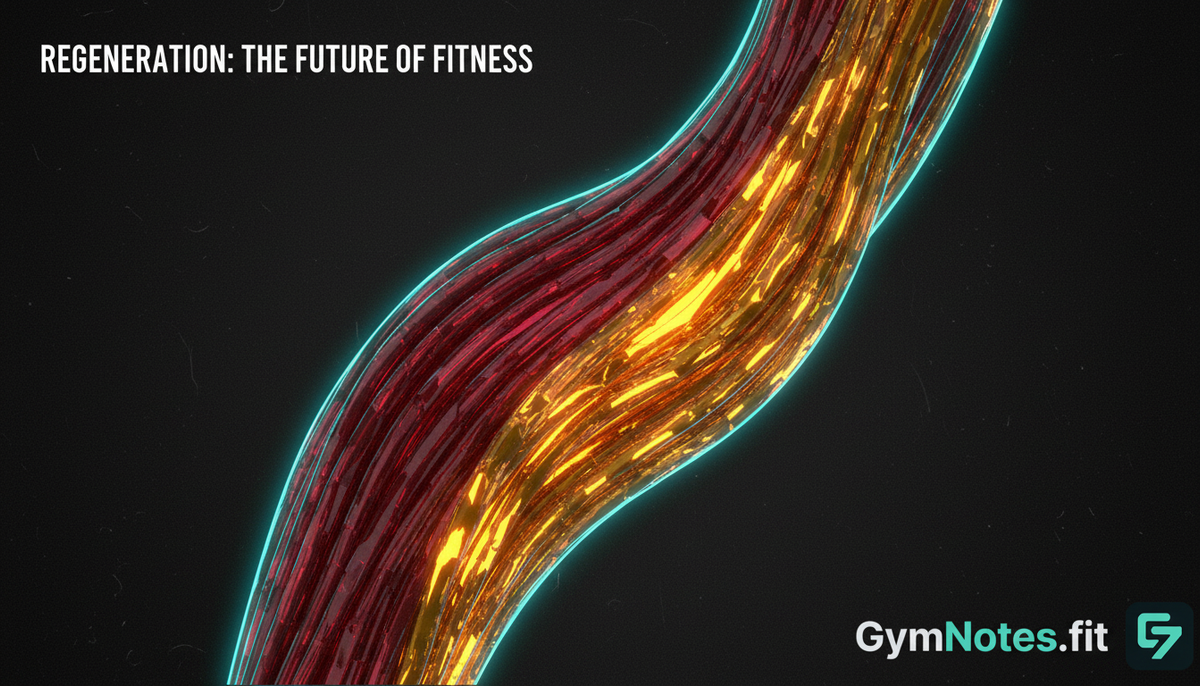
For decades, the "Genetic Lottery" was the final word in hypertrophy. You were either born a fast-twitch power athlete or a slow-twitch endurance grinder. But new analyses into phenotypic plasticity are flipping the script, suggesting that while you can't technically "change" your fiber species, you can force them to commit structural treason.
The Myth of Hardwired Fibers
The old guard of sports science claimed that Type I (slow-twitch) and Type II (fast-twitch) fibers were rigid—fixed at birth like your height. However, a landmark meta-analysis and recent deep-tissue biopsies (Andersen et al., updated context) reveal a much more chaotic reality: the Hybrid Fiber.
Research shows that a significant portion of your muscle tissue exists in a "blurred" state—MHC IIa/IIx hybrids. These are essentially uncommitted fibers waiting for a signal. If you train with high-intensity mechanical tension, these hybrids don't just grow; they mature and "flip" their metabolic profile to act like pure-bred explosive fibers.
Phenotypic Plasticity: Rewiring the Engine
The controversy lies in the "conversion" vs. "maturation" debate. While you may never turn a pure Type I endurance fiber into a Type IIx explosive powerhouse, high-load resistance training (80-85% 1RM) has been shown to aggressively shift the relative abundance of these fibers.
By exposing the muscle to extreme mechanical tension, you trigger the myonuclear transcriptional landscape to favor glycolytic capacity over oxidative endurance. You aren't changing the fiber's "soul," but you are rewiring its entire operating system. The takeaway? Your genetic "limit" is actually a sliding scale of environmental adaptation.
⚡ The GymNotes.fit Takeaway
- Kill the "Rep Range" Dogma: To force hybrid fiber maturation into Type II (fast-twitch) phenotypes, you must prioritize heavy loads (80%+ 1RM). Light-weight "pump" sets primarily expand Type I fibers, which have a lower ceiling for total cross-sectional area.
- Explosive Intent: Regardless of the weight on the bar, the intent to move the load as fast as possible is the primary signal for hybrid fiber conversion. Slow, lazy reps keep your fibers in an uncommitted, low-growth state.
- Consistency over "Confusion": Fiber maturation is a slow process of protein remodeling. Constantly changing your program prevents the transcriptional landscape from settling on a specific phenotype—effectively keeping your muscles in a state of "metabolic identity crisis."
Citations:
- Andersen, J. L., & Aagaard, P. (Updated Meta-Analysis). The Phenotypic Plasticity of Skeletal Muscle Fibers.
- Campos, G. E., et al. Muscular adaptations in response to three different resistance-training regimens.