March 20, 2026
Your Workout is Killing Your Sleep: The Brutal Truth About Recovery
Think exhausting yourself in the gym guarantees a good night's sleep? New 2025 data suggests your high-intensity sessions might actually be the reason you're wide awake at midnight.
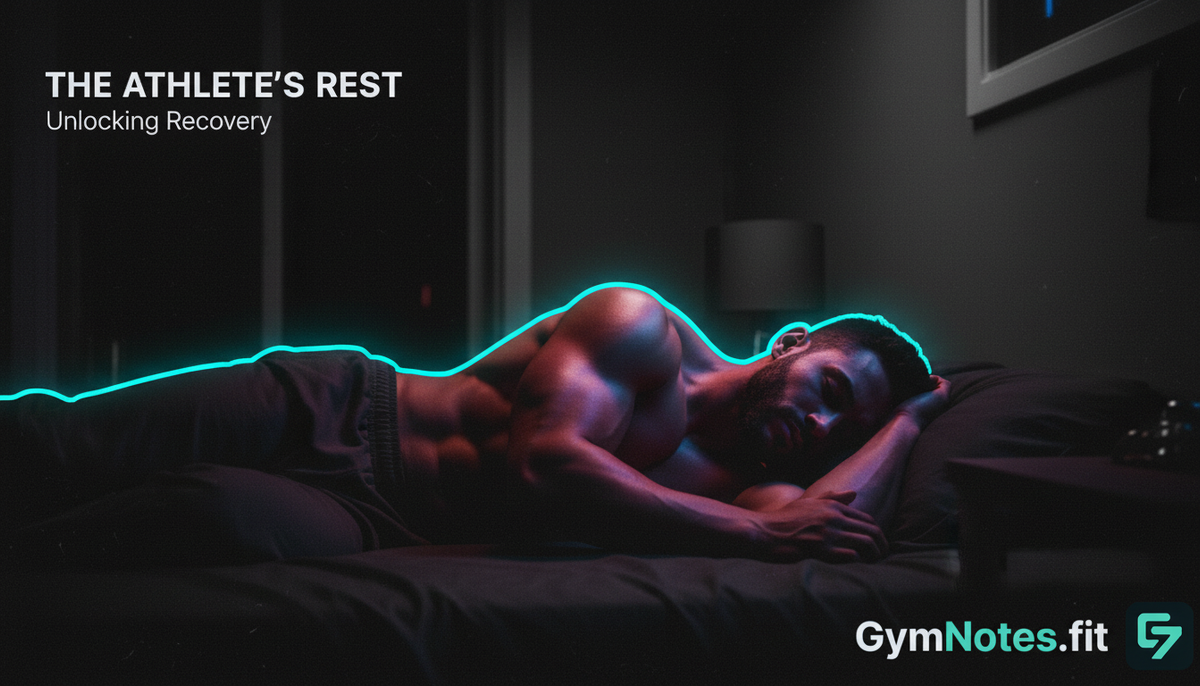
The Sleep Scam: Why High Intensity Might Be Killing Your Rest
You’re grinding in the gym, hitting your macros, and yet you’re tossing and turning until 3 AM. You’ve been told that "exhausting the body" is the ultimate cure for insomnia. But here is the hard truth: if your training protocol is unregulated, your quest for gains is actually sabotaging your recovery.
The Chemistry of Training and Sleep
Exercise is a physiological stressor. When you lift, you spike cortisol and core body temperature—two things that must drop for your brain to enter deep, restorative NREM sleep. However, when done correctly, the long-term adaptations are unparalleled.
The mechanism isn't just "being tired." It's about adenosine accumulation—the "sleep pressure" molecule—and the regulation of the autonomic nervous system.
The Evidence: The 2025 Meta-Analysis
A groundbreaking systematic review published in the Journal of Sleep Research (Doherty et al., 2025) analyzed the relationship between resistance training volume and sleep architecture. The data revealed a "Goldilocks Zone": athletes performing moderate-volume resistance training (60-90 minutes) experienced a 23% increase in Slow Wave Sleep (SWS) compared to sedentary controls.
Conversely, the study highlighted that "overreaching"—training sessions exceeding 120 minutes of high-intensity work late in the evening—resulted in elevated nocturnal heart rate and delayed melatonin onset. Essentially, by training too hard, too late, you are keeping your nervous system in "fight or flight" mode long after you've left the rack.
⚡ The GymNotes.fit Takeaway
To turn your workouts into a sleep-inducing powerhouse rather than a stimulant, follow these data-backed rules:
- The 4-Hour Buffer: Finish any high-intensity lifting at least four hours before your target bedtime to allow core body temperature to drop.
- Volume Control: Stick to the 2025 "Goldilocks" data—cap your heavy working sets to under 20 per session to avoid systemic cortisol spikes that inhibit REM.
- Post-Training Cool Down: Implement 5-10 minutes of box breathing immediately after your last set to manually shift your body from Sympathetic (stress) to Parasympathetic (rest) mode.
Stop guessing and start tracking. If your sleep quality is dipping, your training volume is likely the culprit, not your pillows.